
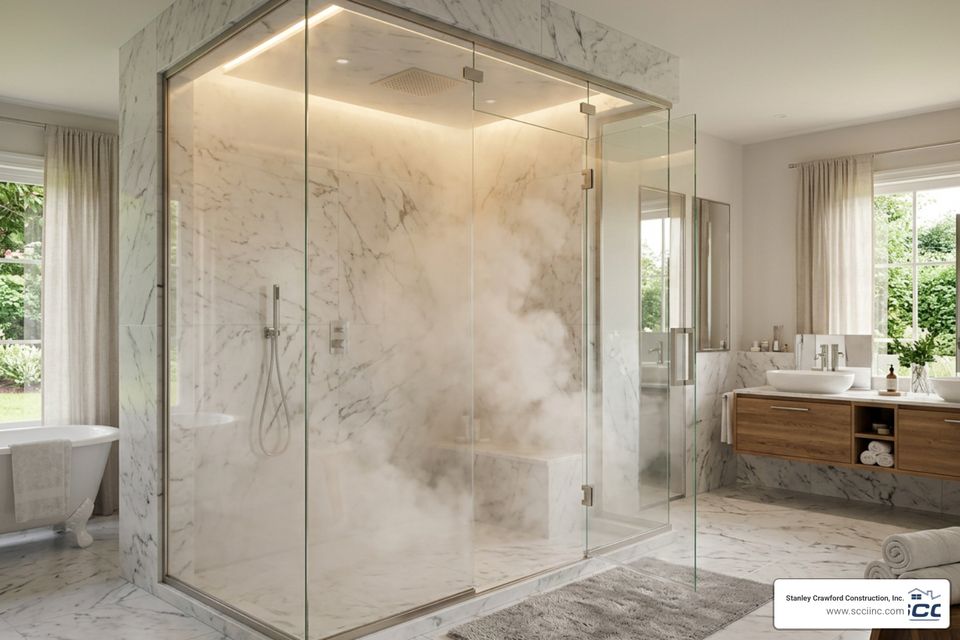
Steam Shower Recommendations and Custom Setup Tips
Why a Custom Steam Shower Is the Upgrade North Central Florida Homeowners Are Asking For
A custom steam shower transforms an ordinary bathroom into a personal wellness retreat — and it's one of the most requested upgrades in new custom home builds across High Springs, Gainesville, Newberry, Alachua, and the Town of Tioga, FL. As a premier custom home builder in these Florida locations, we specialize in designing and constructing these high-end wellness spaces to fit your lifestyle perfectly.
Here's what you need to know at a glance:
- A custom steam shower requires a sealed floor-to-ceiling enclosure and a steam generator
- Generators range from 4 kW to 15 kW depending on your shower's cubic footage
- Three main paths exist: convert an existing shower, build custom from scratch, or install a full steam suite
- Proper waterproofing and ventilation are essential — especially in Florida's humid climate
- A 20-minute steam session uses less than one gallon of water, compared to 40 gallons for a typical bath
- Costs for complete systems range from roughly $4,400 to over $10,000 depending on size and features
Whether you're planning a new custom build or a major bathroom renovation, getting the design and installation right from the start makes all the difference. Done wrong, steam showers can lead to mold, moisture damage, and expensive repairs. Done right, they add daily comfort, health benefits, and lasting home value.
This guide walks you through everything — from choosing the right type and sizing your generator, to waterproofing, materials, and finding the right local team to build it.
Planning Your Custom Steam Shower: Types and Budgets
When planning to bring a spa experience into your home, the first step is deciding which structural approach fits your bathroom layout, lifestyle, and budget. Here in North Central Florida, we typically design and construct three main types of steam showers.1. Shower Conversions
A shower conversion retrofits an existing standard shower into a sealed steam environment. This is often the most cost-effective path for homeowners in High Springs FL and Alachua FL who are already planning a bathroom remodel.- The Process: We strip the existing shower down to the studs to install a proper vapor barrier, run new plumbing and electrical lines for the generator, and replace the standard glass with a floor-to-ceiling, vapor-tight glass enclosure.
- Budget Range: Moderate. While you save on spatial footprint, the cost is heavily influenced by the need for a complete tear-out to ensure proper waterproofing.
2. Custom-Built Steam Showers
A custom-built steam shower is designed from the ground up, allowing you to select the exact dimensions, bench configurations, and tile layouts. This option gives you complete control over materials, hardware, and built-in features like recessed niches and footrests.- The Process: Built during a major home renovation or new construction. We work closely with you to design a custom tile shower design that incorporates built-in seating, multiple showerheads, and specialized lighting.
- Budget Range: Premium. This requires coordinated work from framing carpenters, tile artisans, plumbers, and electricians.
3. Steam Shower Suites
The ultimate luxury upgrade, a steam shower suite is an expansive wellness zone. It often combines a spacious multi-head shower, a dedicated steam area, built-in loungers, and integrated smart home technology. These suites frequently include high-end custom glass enclosures to keep the steam perfectly contained while maintaining an open, airy visual connection to the rest of the master bath.- The Process: Typically reserved for high-end custom home builds where floor space can be allocated specifically for an in-home spa.
- Budget Range: High-end. These systems utilize larger generators, sophisticated multi-port steam heads, and extensive custom masonry.
Converting an Existing Space into a Custom Steam Shower
If you are looking to remodel your current bathroom in Gainesville FL, retrofitting an existing space is highly practical. However, it is not as simple as just adding a glass door to your current setup.To prevent steam from escaping into your bathroom and causing structural issues, the space must be completely sealed. Standard showers are built to shed liquid water, but steam is highly invasive and will find any unsealed gap.
A successful conversion requires a complete tear-out to install a specialized vapor membrane behind your tile. We also upgrade the glass to a thick, tempered system with a pivoting transom window at the top to release excess steam when you are finished. If you are exploring this option, check out our comprehensive guide on shower replacement options to understand how we transition traditional setups into high-performance spaces.
Designing a Custom Steam Shower Suite from Scratch
For homeowners in Newberry FL and the Town of Tioga, FL, building a custom home offers a blank canvas to design the ultimate wellness oasis. When designing a custom steam shower suite from scratch, we integrate plumbing, electrical, and HVAC considerations into the initial architectural blueprints.This phase is where we plan the location of the steam generator (which should be within 25 to 30 feet of the shower), map out dedicated seating benches, and design the slope of the ceiling. Planning early allows us to seamlessly integrate curbless transitions, linear drains, and smart home controls. For a deeper look at how we coordinate these complex custom builds from concept to completion, refer to our bathroom design-build guide.
Sizing and Essential Components for Your Steam Generator
The heart of any custom steam shower is the steam generator. Selecting the correct generator size is crucial: a unit that is too small will fail to reach the desired temperature, while an oversized unit will cycle on and off too quickly, creating an inconsistent steam flow.Generator Size (kW)Maximum Shower Volume (Cubic Feet)Recommended Application6.0 kWUp to 150 cu. ft.Small conversions, acrylic/fiberglass enclosures
7.5 kWUp to 250 cu. ft.Mid-sized ceramic or porcelain tile showers
10.0 kWUp to 400 cu. ft.Large custom tile showers, natural stone accents
12.0 kWUp to 600 cu. ft.Large stone suites, multi-user configurations
15.0 kWUp to 1000+ cu. ft.Expansive custom luxury suites, high ceilings
To find a complete system package that fits your layout, many homeowners opt for pre-configured kits. For small to mid-sized spaces, a 7.5 kW steam generator package provides excellent heating capacity and includes modern touchscreen controls.
For larger custom enclosures or natural stone setups that require more power, a heavy-duty 12 kW steam generator package ensures rapid steam production and consistent temperature management.
Other popular options include the highly reliable SimpleSteam™ Kit - 7.5kW in Matte Black 5P-EST07-BL | Delta Faucet and the SimpleSteam™ Kit - 6kW in Lumicoat® Chrome 5P-EST06-PR | Delta Faucet, both of which feature compact designs that fit easily under a vanity or in an adjacent closet.
For massive, estate-sized custom suites, a system like the Mr. Steam Super (Butler) 15 kW (15000 W) Steam Shower Generator Packag — OffGrid Living provides the high-output performance required to fill expansive spaces.
Sizing Calculations and Material Adjustments
Calculating the correct size of your steam generator involves more than just basic math. While the starting point is the physical cubic footage of the space (Length x Width x Height), we must apply "heat loss factors" based on the materials used in your shower's construction.Different materials absorb and conduct heat differently:
- Porcelain or Ceramic Tile: Multiply your cubic footage by 1.20 (a 20% increase). Porcelain is relatively dense but retains heat reasonably well.
- Glass Tile or Glass Block Walls: Multiply by 1.35 to 1.40 (a 35% to 40% increase) due to the rapid rate at which glass transfers heat to the outside air.
- Natural Stone (Marble, Granite, Slate, or Travertine): Multiply by 2.00 (a 100% increase). Natural stone acts as a massive heat sink, requiring twice the energy to warm up compared to synthetic materials.
- Exterior Walls: If your shower shares one or more walls with the exterior of your home, add another 10% to 20% to the total to account for outdoor temperature fluctuations.
- Ceiling Height: The maximum recommended ceiling height for a standard residential steam shower is 10 feet. If your ceiling is over 8 feet, add 15% for every additional foot of height.
Always consult with an experienced builder to verify these calculations before purchasing your equipment. Choosing the wrong generator can result in a lukewarm, disappointing steam experience.
Waterproofing, Ventilation, and Moisture Management
In North Central Florida, managing moisture is a year-round battle. When you introduce 100% humidity and temperatures up to 120°F into a residential home, proper waterproofing and ventilation are your primary defenses against structural rot and mold growth.To protect your home, we install a continuous, vapor-impermeable membrane over the ceiling, walls, and floor. Traditional cement board and standard tile grout are highly porous; steam will pass right through them, condensing inside your wall cavities.
We use advanced waterproofing systems, such as Schluter-KERDI sheet membranes or high-performance liquid vapor barriers, to ensure that water vapor cannot escape the shower envelope.
Failing to address these details can lead to severe structural damage and unhealthy indoor air quality. If you are currently dealing with bathroom moisture issues or want to ensure your new build is completely protected, read our expert tips on mold remediation and prevention.
Vapor Proofing and Ceiling Slope Best Practices
When designing the physical layout of your steam enclosure, there are two golden rules we always follow:Slope the Ceiling: A flat ceiling in a steam shower is a recipe for cold drips. As steam rises, it condenses on the ceiling. If the ceiling is flat, those cold water droplets will pool and drip directly onto your head while you are trying to relax. To prevent this, we slope the ceiling at a rate of 2 inches per foot. This slope coaxes the condensing water to run smoothly down the walls and into the floor drain.
Outside-the-Shower Ventilation: Never place an exhaust fan inside the steam shower enclosure itself. The fan will rust rapidly, and the ductwork will collect massive amounts of condensation. Instead, we install a high-capacity, vapor-sealed exhaust fan just outside the steam shower door. When you finish your session and open the glass door, the fan efficiently captures the escaping steam and vents it directly to the exterior of your home.
Health and Wellness Benefits of Steam Showers
Beyond the sheer luxury of having a spa in your master bathroom, regular steam therapy offers a wide range of scientifically backed health benefits.- Cardiovascular Health: The gentle heat of a steam room dilates blood vessels, improving overall circulation and lowering blood pressure.
- Respiratory Relief: Inhaling warm, humid air is highly beneficial for clearing nasal passages, soothing irritated airways, and relieving congestion caused by seasonal allergies.
- Muscle Recovery: Steam therapy helps flush metabolic waste from muscle tissues, reducing soreness and accelerating recovery after a workout.
- Skin Vitality: The combination of heat and humidity opens up pores, allowing deep cleansing and promoting a healthy, natural glow.
For homeowners interested in exploring advanced, high-performance residential steam systems, brands like premium home steam systems offer cutting-edge technology designed to deliver incredibly consistent steam and integrated aromatherapy experiences.
Comparing Wet Steam and Dry Sauna Heat
Many homeowners ask us whether they should install a steam shower or a traditional dry sauna. While both offer exceptional wellness benefits, they provide very different physical experiences:- Steam Showers (Wet Heat): Operate at lower temperatures (typically 110°F to 115°F) but maintain 100% humidity. The high humidity prevents sweat from evaporating, making the environment feel much hotter than it actually is. It is highly hydrating for the skin and respiratory system.
- Traditional Saunas (Dry Heat): Operate at much higher temperatures (often 160°F to 200°F) with very low humidity (usually 10% to 20%). This dry heat promotes intense sweating and deep cardiovascular conditioning.
Because a steam shower also functions as your everyday shower, it is incredibly space-efficient, making it the preferred choice for most modern bathroom layouts.
Frequently Asked Questions about Custom Steam Showers
As custom home builders, we hear many of the same questions from clients planning their bathroom upgrades. Here are the facts you need to know.For those planning modern, accessible layouts, we often combine these projects with zero-threshold entries. Learn more about this seamless design in our guide to curbless shower construction.
How much water does a custom steam shower use compared to a bath?
Many people assume that running a steam shower is an environmental luxury that wastes water. In reality, steam showers are incredibly eco-friendly:- An average 20-minute steam session uses less than one gallon of water.
- By comparison, a standard shower uses about 40 to 50 gallons of water, and filling a luxury soaking tub can easily require 40 to 80 gallons.
This makes steam showers one of the most water-efficient ways to relax and unwind.
What is the best wall material for a steam shower?
The absolute best wall material for a steam shower is porcelain tile. Porcelain is highly dense, virtually non-porous, and exceptionally resistant to moisture absorption.While natural stone like marble or slate looks stunning, it is highly porous. If you choose natural stone, the material must be professionally sealed during installation and resealed regularly to prevent water from penetrating the stone and causing discoloration or structural damage.
Can I install a steam generator in an attic or closet?
Yes! Steam generators are compact (typically about the size of a large briefcase) and can be installed up to 25 to 30 feet away from the shower itself.Common installation locations include:
- A vanity cabinet inside the bathroom
- A nearby linen closet
- A heated basement or crawl space
- An insulated attic space directly above the shower
The key is ensuring the generator remains accessible for future maintenance and is protected from freezing temperatures.