The Ultimate Guide to Tub-to-Shower Conversions and Finding Local Pros
Why a Tub-to-Shower Conversion Is One of the Smartest Bathroom Upgrades You Can Make
A tub to shower conversion is exactly what it sounds like: removing your existing bathtub and replacing that space with a walk-in shower. Here's a quick overview of what's involved:
What is a tub-to-shower conversion? Remove the existing bathtub Inspect and repair the subfloor and walls Adjust plumbing (drain and valve locations) Install waterproofing and a shower base Add walls, fixtures, doors, and safety features
Most conversions take 1 to 5 days, depending on complexity. Costs typically range from $2,000 for basic prefab installs up to $8,000+ for custom tile work with plumbing changes.
If your bathtub barely gets used, feels unsafe to step into, or just takes up space your bathroom could use better — you're not alone. Millions of homeowners across the country are making the switch, and in North Central Florida communities like Gainesville, High Springs, and Newberry, the trend is just as strong.
The appeal is simple. Showers fit modern life better for most people. They're faster, safer, and easier to keep clean. And when done right, a walk-in shower can make a bathroom feel noticeably larger and more polished.
But a tub-to-shower conversion isn't just a swap. Behind the walls, there are subfloors to inspect, drains to relocate, waterproofing to plan, and local permits to pull. Skipping those steps is where most renovation regrets begin.
This guide walks you through everything — from planning and costs to the step-by-step process — so you can move forward with confidence.
What is a Tub-to-Shower Conversion and When Does It Make Sense?
A tub to shower conversion is more than a simple aesthetic swap; it is a structural and functional redesign of your bathroom's primary wet area. By removing the bulky footprint of a traditional tub, you open up physical and visual space, allowing for a more modern, accessible, and comfortable daily routine.Understanding the Tub to Shower Transition
At its core, the conversion involves removing your existing alcove, drop-in, or freestanding tub and preparing the exposed footprint for a dedicated shower pan or custom-tiled floor.While some homeowners opt for budget-friendly transitional options like a Tub Cut Out Kit - Bathtub Conversion Kit | Quick Tub or a Walk-In Bathtub Insert - Walk-In Tub Conversion Kit | Quick Tub to reduce step-in height without full demolition, a true conversion replaces the entire unit.
This creates a seamless, low-threshold walk-in shower. For homeowners looking to completely reimagine their space, exploring professional bathroom remodeling services in Lake City ensures that every structural element—from the subfloor to the finished tile—is handled with precision.
Evaluating Your Bathroom Layout and Resale Value
When deciding whether to convert your bathtub into a walk-in shower, layout and resale appeal are critical factors.- The Single-Tub Rule: If your home only has one bathroom, or if you are planning to eliminate the only bathtub in the house, think carefully. In family-oriented Florida markets, the complete absence of a tub can be a line-item objection for buyers with young children. Keeping at least one bathtub in a secondary bathroom preserves your home's broad appeal.
- Master Bath Upgrades: If you are converting a tub in your primary master suite, buyers in modern markets like Gainesville, Alachua, and Town of Tioga overwhelmingly prefer a spacious walk-in shower over an outdated tub-shower combo.
For high-end master suites, a custom design-build solution that pairs a tiled walk-in shower with beautiful finishes is one of the best investments you can make for daily enjoyment and long-term resale value.
Designing for Safety, Accessibility, and Aging in Place
One of the most compelling reasons to undergo a tub to shower conversion is safety. Stepping over a 15-inch tub wall on a wet, slippery surface is a leading cause of household falls.By designing a barrier-free or low-threshold entry, you significantly reduce slip-and-fall risks. Key accessibility features to consider during your design phase include:
- Slip-Resistant Flooring: Choosing textured tile or slip-resistant acrylic pans.
- Grab Bars: Installing secure, structural grab bars anchored into wall blocking behind the tile.
- Handheld Sprayers: Allowing for flexible, seated showering options.
- Built-In Seating: Incorporating a custom tiled bench or a fold-down shower seat.
Planning Your Tub to Shower Project: Costs, Permits, and Timelines
A successful conversion requires balancing your design dreams with realistic timelines, budgets, and local building codes.Feature / FactorStandard Prefabricated InstallationCustom SCCI Design-Build RemodelAverage Cost$2,000 - $4,500$5,500 - $10,000+
Timeline1 - 2 Days5 - 10 Days (depending on custom tile & plumbing)
Material DurabilityModerate (Acrylic/Fiberglass)High (Custom Tile, Solid Stone, Premium Fixtures)
Layout FlexibilityLimited to standard alcove sizesFully customizable to any bathroom footprint
Waterproofing IntegrityStandard caulk/seam jointsMulti-layer premium membranes (Schluter/RedGard)
Resale ROI ImpactStandard functional upgradeHigh-end luxury appeal & custom aesthetic
Estimating the Cost of a Tub to Shower Conversion
Your overall project budget will be driven primarily by your choice of materials and the complexity of your plumbing.Plumbing Modifications: A standard shower drain is 2 inches in diameter, while a bathtub drain is typically 1.5 inches. Upgrading this drain size and relocating it from the end of the old tub footprint to the center of the new shower pan is a major cost factor.
Material Selection: While prefabricated acrylic kits are cost-effective, custom tile surrounds offer unmatched durability and design freedom.
Subfloor Repairs: If your old tub had a slow, unnoticed leak, you may need to budget an additional $300 to $800 for subfloor remediation and joist reinforcement.
For homeowners exploring local options, consulting with an experienced local contractor can help you benchmark material and labor expectations in the North Central Florida area.
Local Permitting and Building Codes in North Central Florida
Do you need a permit to convert a tub to a shower? In almost all North Central Florida jurisdictions—including Columbia County and Alachua County—the answer is yes.Because a conversion involves altering the sanitary drainage system (upgrading the drain line to 2 inches) and modifying water supply lines, local building departments require a plumbing permit. Working with a licensed professional who understands local codes ensures your project is fully compliant, safe, and built to last. For a deeper dive into local building processes, refer to our A-Z Guide to Bathroom Design Build in High Springs, FL.
Step-by-Step Guide to the Conversion Process
A professional tub to shower conversion follows a structured, multi-phase process to ensure the new wet area is completely waterproof and structurally sound.Demolition and Behind-the-Wall Inspections
The first step is carefully removing the old tub, wall surrounds, and drywall down to the bare studs. This phase is crucial because it reveals what has been happening behind your walls for years.Water damage and mold are common discoveries when old tubs are pulled out. If mold is present, it must be treated immediately before any new materials are installed. You can learn how to handle these unexpected discoveries in our guide on how to tackle mold remediation like a boss.
Plumbing Adjustments and Waterproofing
Once the framing is exposed and cleared of any damage, plumbing adjustments begin:- Drain Relocation: The drain is resized to 2 inches and positioned correctly for the new shower pan.
- Valve Installation: The old tub-shower valve is replaced with a modern, pressure-balanced shower valve.
- Waterproofing Membrane: A high-quality waterproofing membrane (such as Schluter-Kerdi or RedGard) is applied to the subfloor and wall backing. This creates an impermeable barrier that prevents water from ever reaching your home's structural wood framing.
Local projects across the region, from Jacksonville to custom homes in High Springs, FL, highlight how proper behind-the-wall waterproofing is the single most important factor in the longevity of a remodel.
Choosing Your Shower Enclosure, Fixtures, and Custom Storage
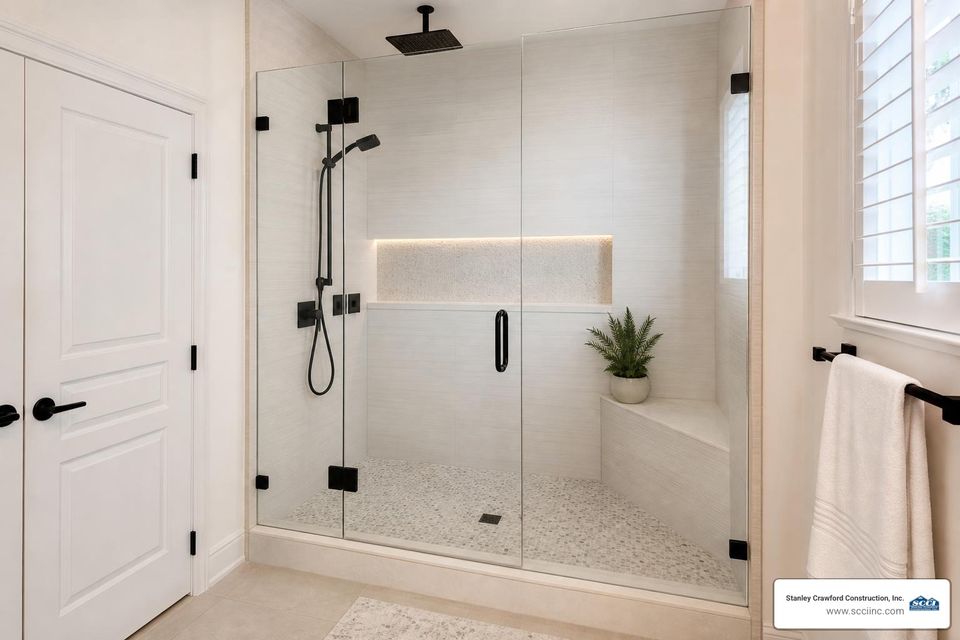
With the infrastructure complete, the fun part begins—customizing your finishes!- Enclosures: Frameless glass doors provide a sleek, modern look that opens up the visual space of a small bathroom.
- Custom Storage: Say goodbye to rusty shower caddies. Built-in tiled niches and custom bathroom storage solutions keep your essentials organized. To maximize your space, consider incorporating tailored cabinetry by reading about custom bathroom storage options.
- Fixtures: Select high-efficiency showerheads, rain showerheads, or multi-jet systems to create a spa-like experience. Homeowners in the Town of Tioga and Gainesville often opt for premium brushed gold or matte black fixtures to match modern design trends.