Stop Winging It: The Ultimate Home Building Checklist PDF
Why Every 2026 Homeowner Needs a Plan Before Breaking Ground
If you're looking for an ultimate home building checklist pdf free download, here's a quick overview of what a complete checklist should cover:
Pre-Construction Planning - Budget, land selection, permits, financing, and hiring your builder
Site Preparation & Foundation - Grading, excavation, drainage, concrete pouring, and curing
Framing & Rough-In Systems - Wall frames, roof trusses, electrical wiring, plumbing, and HVAC
Interior & Exterior Finishes - Insulation, drywall, flooring, cabinetry, siding, and roofing
Final Inspections & Move-In - Punch list, certificate of occupancy, warranties, and system manuals
Building a custom home in North Central Florida — whether in High Springs, Gainesville, Newberry, Alachua, or the Town of Tioga — is one of the most exciting things you'll ever do. It's also one of the most complex.
There are hundreds of decisions to make. Permits to pull. Subcontractors to coordinate. Florida building codes to follow. And a budget that can spiral fast if nothing is tracked.
Most homeowners don't realize how much they don't know until something goes wrong.
A missed inspection. A change order that costs $300 or more. A framing detail that gets buried behind drywall before anyone catches it. These aren't rare — they're common. And they're almost always avoidable with the right plan in place.
That's exactly what a home building checklist is for. It keeps every phase organized, every trade accountable, and every decision documented — from the first soil test to the day you get your keys.
1. Pre-Construction: Planning Your North Central Florida Dream Home
The success of your 2026 build isn't determined when the first nail is driven; it’s determined months before in the planning phase. In North Central Florida, "pre-construction" involves more than just picking out paint colors. It’s about ensuring your vision is legally and physically possible on your chosen lot.Selecting the Right Building Site
Whether you are looking at a wooded lot in High Springs or a property near the Town of Tioga, site selection is critical. You must consider:- Topography and Soil: Florida's sandy soil and high water tables mean a soil test is non-negotiable. You need to know if the land can support your foundation and if it has proper drainage.
- Zoning and Easements: Check for utility easements that might restrict where you can build. In places like Newberry, utilities connection planning (water, sewer, electric) needs to happen early to avoid massive surprise costs later.
- Design Standards: If you’re building in a community with specific design standards, like the Town of Tioga, your plans must align with their aesthetic and structural requirements.
Budgeting and Financing
A realistic budget is the backbone of your project. Beyond the land price, your budget must include planning fees, permit costs, impact fees, and a healthy contingency fund (usually 10-15%). Construction loans in 2026 often have specific borrowing limits, so consulting with a lender early is vital.Hiring Your Team
Don't settle for the first builder you find. You need someone who knows the local landscape of Alachua County and the surrounding areas. When How To Find The Right Home Builder Near Lake City Florida, look for a partner with decades of experience who understands Florida-specific challenges like hurricane-rated roofing and humidity control.Before you sign any contracts, ensure you have a comprehensive document to guide your discussions. You can find a great starting point with The Ultimate New Home Construction Checklist | Download PDF Now!.
2. Site Prep, Foundation, and Framing Essentials
Once the paperwork is signed and the permits are pulled, it’s time to move some dirt. This phase is where your home’s "bones" are established.Site Preparation and Grading
In North Central Florida, grading is about more than just making the ground flat; it’s about moving water away from your future structure. Proper excavation ensures that the site is cleared of debris and leveled according to your engineered site plan.The Foundation: Your Home’s Bedrock
The foundation is the most critical structural element. Whether you are opting for a slab-on-grade or a crawl space, the process involves:- Forming and Rebar: Ensuring the steel reinforcement is placed exactly according to the structural engineer's specs.
- The Pour: Concrete must be poured and leveled (plumb and square).
- Curing: Concrete doesn't just "dry"; it cures chemically. Proper curing time prevents future cracks that can lead to expensive repairs.
For a deeper dive into what makes a build "high quality," check out our guide on Everything You Need To Know About Quality Home Construction.
Framing: Seeing the Shape
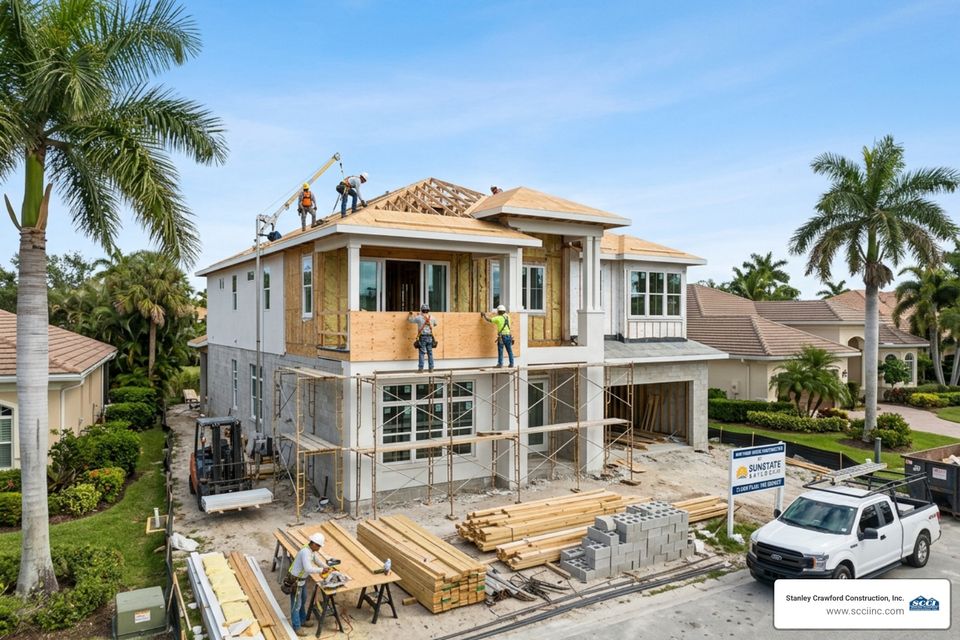
This is the "exciting" part where the house finally looks like a house. This includes the floor systems, wall frames, and roof trusses.- Sill Plate Sealing: We always recommend sealing the bottom plate (sill plate) to prevent air and moisture infiltration.
- Moisture Barriers: Given the Gainesville humidity, high-quality house wrap is essential to protect your framing from rot before the siding goes up.
- Window and Door Headers: These must be checked for levelness and height consistency to ensure your trim looks perfect later.
3. Interior Finishes and Exterior Systems
With the "shell" complete, the focus shifts to the systems that make the house livable and the finishes that make it yours.MEP Systems: Mechanical, Electrical, and Plumbing
Before the drywall goes up, all the "guts" of the house must be installed.This is known as the "rough-in" phase.
- Plumbing and Electrical: Ensure protection plates are installed where wires or pipes pass through studs. This prevents a stray drywall screw from causing a leak or a fire.
- HVAC Ductwork: In our climate, duct sealing is paramount for energy efficiency. You don't want to pay to cool your attic!
- Pre-Drywall Inspection: This is your last chance to see behind the walls. We recommend taking photos or video of every wall bay so you know exactly where every wire and pipe is located for future renovations.
Interior Finishes
This is where your A Practical Guide To Custom Home Design Process truly shines.- Insulation and Drywall: Proper insulation (we often recommend spray foam for Florida attics) keeps your energy bills low. Drywall should be hung with screws spaced 6-8 inches apart and finished with multiple coats of joint compound.
- Cabinetry and Flooring: Whether you’re choosing hardwood, tile, or LVP, transitions between rooms should be handled with care.
- Appliances: Ensure your kitchen layout accounts for the specific dimensions of your chosen appliances (like measuring the height of your tallest pot for the pot filler!).
Exterior Features and Landscaping
Don't forget the outside!- Splashback Prevention: One pro tip we often share is adding a band of rock or gravel along the exterior walls. This prevents rain from hitting the dirt and splashing mud (and moisture) back onto your siding or paint, which can cause long-term damage.
- Landscaping: Choose Florida-native plants that thrive in Alachua County's climate to reduce water consumption and maintenance.
4. Final Inspections and the Move-In Punch List
The finish line is in sight, but you can't rush the final details. This phase is about accountability and ensuring the home meets every safety and quality standard.The Final Walkthrough and Punch List
Before you make the final payment, you will walk through the home with your builder. This is when you create a "punch list"—a list of small defects or unfinished items.- Prioritize: Categorize issues by severity. A missing cabinet handle is a "cosmetic" issue, while a non-functional outlet is a "functional" issue.
- Test Everything: Turn on every faucet, flush every toilet, and test every single light switch.
Obtaining the Certificate of Occupancy (CO)
In Florida, you cannot legally move into your new home until the local building department issues a Certificate of Occupancy. This proves the home has passed all final inspections—structural, electrical, plumbing, and fire safety.Documentation and Warranties
Collect all your manuals and warranty information in one place. Using The Ultimate Guide to Building a House: Free PDF Checklist can help you track these documents. You should have:- Appliance manuals and registrations.
- HVAC system specifications.
- Roofing warranty information.
- A list of all subcontractors and their contact info for future maintenance.
Frequently Asked Questions about the Ultimate Home Building Checklist PDF Free Download
How do I use the ultimate home building checklist pdf free download for a custom home?
The best way to use an ultimate home building checklist pdf free download is as a living document. Don't just read it once; bring it to every site meeting. Use it to track progress sequentially. If you are using a digital version, you can share it with your builder to ensure you are both on the same page. It’s about creating transparency and ensuring that "we thought we told you that" never becomes an issue.What are the most common mistakes to avoid in the ultimate home building checklist pdf free download?
The biggest mistake is skipping inspections or assuming the builder has "got it covered." Even the best builders appreciate an organized homeowner. Other common pitfalls include:- Change Orders: Making decisions late in the game. Each change order can cost hundreds in labor and administrative fees.
- Ignoring Local Codes: Florida has some of the strictest building codes in the country due to hurricane risks. Never cut corners on structural requirements.
- Missing Protection Plates: Forgetting to protect plumbing and electrical lines before drywall goes up is a recipe for future disaster.