
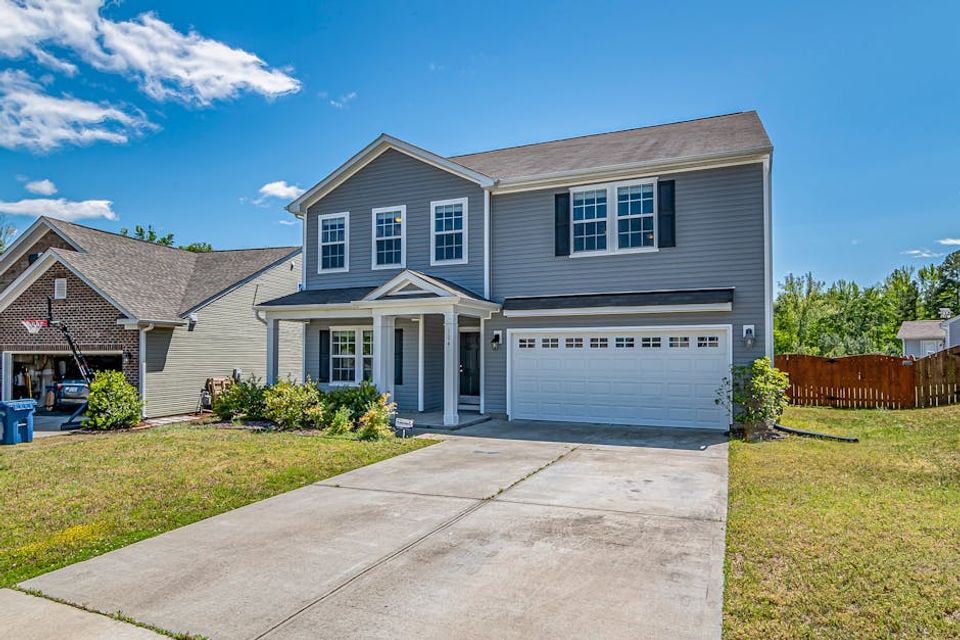
Expanding Your Home: The Attached Garage Edition
Why an Attached Garage Addition Is One of the Smartest Home Investments You Can Make
An attached garage addition is a construction project that connects a new garage directly to your existing home, sharing at least one wall and often the roofline.
For homeowners in High Springs, Gainesville, Newberry, and surrounding North Central Florida communities, an attached garage addition is one of the most practical ways to expand your home. As a premier custom home builder in Gainesville and High Springs, we know that whether you need a safe place to park, extra storage, or a launchpad for a future in-law suite, this kind of addition delivers on multiple fronts.
Consider this: 66% of U.S. homes already have a garage or carport. If yours doesn't — or if you're working with an undersized single-car setup — you may be leaving real money on the table when it comes time to sell.
Florida's climate makes the case even stronger. Protecting your vehicles from intense sun, afternoon storms, and hurricane season is a practical concern, not just a luxury. And in tight-knit neighborhoods like Town of Tioga or Alachua, a well-designed attached garage can meaningfully boost your home's curb appeal and resale value.
The planning process, though, has real complexity — from structural assessments and Florida building codes to matching your home's architectural style. This guide walks you through every step.
Planning Your Attached Garage Addition: Costs and ROI
When we sit down with homeowners in Lake City or Gainesville to discuss an attached garage addition, the conversation naturally starts with the "bottom line." Adding a garage is a significant financial commitment, but it is also one of the few home improvements that consistently pays for itself.On average, a garage addition offers a return on investment (ROI) of 78% to 81%. This means that if you spend $30,000 on the project, you can expect your home's resale value to increase by roughly $24,000. In the competitive North Central Florida real estate market, a home without a garage is often at a disadvantage, especially for families looking for security and storage.
One of the primary advantages of an attached model is cost efficiency. Because the addition shares at least one wall with your existing house, you save on materials and labor. In fact, attached garages are typically about 12% cheaper to build than detached ones.
If you are looking for ways to manage your investment, exploring budget-friendly home remodeling ideas can help you prioritize where to spend and where to save.
Factors Influencing the Cost of an Attached Garage Addition
No two garage projects are exactly alike. Several variables will dictate where your project falls on the price spectrum:- Square Footage: A standard 1-car garage (240–540 sq ft) typically ranges from $8,600 to $49,400. Moving up to a 2-car garage (400–720 sq ft) usually costs between $11,100 and $60,400.
- Material Quality: Choosing premium carriage doors, hurricane-rated windows, or high-end siding will increase the price but also enhance the aesthetic.
- Site Preparation: This is a big one in High Springs and Alachua. If the ground is soft or requires significant grading and tree removal, your site prep costs will climb.
- Labor Rates: Local demand for skilled trades in the Gainesville and Newberry areas affects the overall quote. Working with an experienced builder ensures that these labor costs translate into high-quality craftsmanship.
To better understand how these pieces fit together, you can learn more about Florida remodeling and the specific challenges our regional climate and geography present.
Regional Pricing for an Attached Garage Addition
In North Central Florida, material shipping and local contractor availability play huge roles in pricing. While national averages are a good starting point, Gainesville market trends often reflect a higher demand for hurricane-resistant features, which can slightly increase the cost of materials like specialized garage doors and roofing fasteners.When planning, we always recommend the "design-build" approach. This integrates the design phase with the construction phase, preventing "sticker shock" later on when a fancy architectural drawing turns out to be too expensive to actually build. If you're new to this process, check out our beginner's guide to design-build services for a clearer picture of how we manage your budget from day one.
Structural Requirements and Safety Standards
Building an attached garage addition isn't just about framing four walls and a roof; it’s about creating a safe barrier between your vehicles and your living space. Because garages store combustible fuel and produce carbon monoxide (CO), the safety requirements are stringent.One of the most critical elements is the fire separation. Florida building codes require a minimum of 1/2-inch gypsum wallboard (drywall) on the garage side of any wall shared with the house. If there is a habitable room above the garage, the ceiling must be protected with 5/8-inch Type X fire-rated drywall.
Essential Safety Features for Your Attached Garage Addition
Safety doesn't stop at the walls. To meet local standards in Alachua County and surrounding areas, we focus on:- Fire-Rated Doors: The door leading from the garage to the house must be a solid-core wood door (at least 1 3/8 inches thick) or a 20-minute fire-rated steel door. It should also be self-closing to ensure it isn't accidentally left open.
- CO Prevention: To prevent exhaust fumes from seeping into your home, all penetrations through the shared wall (like plumbing or electrical) must be tightly sealed with fire-caulk.
- Ventilation: Proper airflow is essential to dissipate heat and fumes, especially during our humid Florida summers.
- Smoke and Heat Detectors: We integrate these into your home’s existing system to provide early warning in case of a garage fire.
Navigating these technical requirements can feel overwhelming, which is why we offer a step-by-step guide to home design consultation to help you understand the "why" behind every code requirement.
Foundation and Framing for Florida Homes
In Florida, our foundations have to work a little harder. We typically use monolithic slabs—where the foundation and the floor are poured as one single piece of concrete—or stem walls if the lot has a slope.- Moisture Barriers: Before the concrete is poured, we lay down a heavy-duty vapor barrier. This prevents Florida’s high ground moisture from seeping up through the slab and damaging your items or causing mold.
- Termite Protection: Before we even think about framing, the soil must be treated for termites. This is a non-negotiable step in Newberry and High Springs.
- Hurricane Straps: To ensure your garage stays attached during a storm, we use specialized metal connectors (hurricane straps) to tie the roof trusses to the wall studs and the studs to the foundation.
To see examples of how we’ve implemented these structural standards in real-world projects, explore our gallery of additions.
Design and Customization for Maximum Functionality
The best part of an attached garage addition is making it your own. It doesn't have to be a dark, oily cave for your car. In modern North Central Florida homes, the garage often serves as a multi-functional hub.One of the most popular trends in the Town of Tioga and Gainesville is adding a "bonus" space. Whether it's an in-law suite for visiting grandparents, a quiet home office away from the kids, or a master suite expansion, the space above your garage is a "diamond in the rough." Since the foundation is already being built for the garage, adding a second story is one of the most cost-effective ways to gain significant square footage.
If you are looking for inspiration on how to use this new space, here are 10 home remodeling ideas to transform your living space.
Customizing Your Attached Garage Addition
To make your garage truly functional, consider these upgrades:- Carriage-Style Doors: These add instant character and can be insulated to keep the garage cooler.
- Epoxy Flooring: A professional epoxy finish is easy to clean, slip-resistant, and looks fantastic.
- Workshop Lighting: If you plan to use the space for hobbies, we can install high-output LED shop lights and dedicated 20-amp circuits for power tools.
- HVAC Integration: In Florida, a "conditioned" garage is a game-changer. Even a small mini-split AC unit can make the space usable year-round.
- Custom Cabinetry: We can design wall-to-wall storage solutions that keep your tools, holiday decorations, and sports gear organized and off the floor.
Architectural Integration in North Central Florida
The biggest mistake homeowners make is building a garage that looks like an "afterthought." A well-designed attached garage addition should look like it was built with the house in 1995 or 2024—whichever applies!We achieve this by: Matching Siding and Paint: We source materials that match your existing home’s texture and color. Roof Pitch Alignment: The angle of the garage roof should complement the main house. Window Placement: Using the same window styles and trim helps the addition blend in. Landscaping: We ensure the new driveway and walkways integrate with your existing yard, preserving the curb appeal that makes neighborhoods like those in Alachua so desirable.
Frequently Asked Questions about Garage Additions
Is an attached garage cheaper than a detached one?
In most cases, yes. An attached garage addition is roughly 12% less expensive than a detached structure. This is primarily because you are "borrowing" one of your home's existing walls. Additionally, it is much easier and cheaper to extend your home’s existing electrical and HVAC systems into an attached space than it is to run new underground lines to a detached building across the yard.Do I need a permit for a garage addition in Alachua?
Absolutely. Whether you are in Alachua, Gainesville, or Newberry, you will need a building permit. Local zoning laws dictate "setbacks"—the distance your garage must be from the property line—and "lot coverage" limits, which restrict how much of your land can be covered by buildings. Navigating the Alachua County permitting office can be a headache, but as part of our service at SCCI, we handle all the paperwork and inspections for you.How long does the construction process take?
A typical attached garage addition takes between 8 to 12 weeks once ground is broken, but the "pre-construction" phase (permitting and design) can take an additional 4 to 6 weeks.- Phase 1: Design and Permitting (4–6 weeks)
- Phase 2: Site Prep and Foundation (1–2 weeks)
- Phase 3: Framing and Roofing (2–3 weeks)
- Phase 4: Exterior Finishing and Doors (2 weeks)
- Phase 5: Interior Finishing and Electrical (2–3 weeks)
Weather delays, particularly during Florida's rainy season, can occasionally shift these timelines, but our project management team keeps you updated every step of the way. Learn more about our services and how we keep projects on track.